


As a supplier of empty herb capsules, I often get asked a crucial question by customers, researchers, and health - conscious individuals alike: "Do empty herb capsules dissolve in water?" This question is not only fundamental for understanding the product but also has far - reaching implications for various applications, from herbal supplements to pharmaceutical formulations.
Understanding the Basics of Empty Herb Capsules
Empty herb capsules come in different types, each with its own unique composition and properties. The most common types are gelatin capsules and vegetarian capsules, such as those made from hydroxypropyl methylcellulose (HPMC).
Gelatin capsules are derived from animal collagen, typically sourced from bovine or porcine. They have been used for a long time in the pharmaceutical and nutraceutical industries due to their excellent encapsulation properties. Gelatin capsules are generally soluble in warm water. When placed in water at a temperature around 37°C (body temperature), they start to soften and gradually dissolve. This solubility is beneficial as it allows for the timely release of the contents inside the capsule once it reaches the digestive system.
On the other hand, HPMC Based Capsules are made from plant - based materials, making them a popular choice for vegetarians and vegans. HPMC is a semi - synthetic polymer that is derived from cellulose. It has several advantages over gelatin, including better stability, lower moisture content, and resistance to microbial growth.
Solubility of HPMC Capsules in Water
The solubility of Clear HPMC Capsules in water is a bit more complex compared to gelatin capsules. HPMC capsules do not dissolve as rapidly as gelatin capsules in plain water. In fact, they can remain intact for a relatively long time in water at room temperature.
The reason for this lies in the chemical structure of HPMC. The polymer chains in HPMC are more tightly bound compared to gelatin. Water molecules have a harder time penetrating these chains and breaking them apart. However, in an environment similar to the human digestive tract, where there are enzymes and a specific pH level, HPMC capsules will dissolve.
In the stomach, the acidic environment (pH around 1.5 - 3.5) starts to break down the HPMC capsules. The acid helps to hydrolyze the polymer chains, gradually weakening the capsule structure. Once the capsule structure is compromised, the contents are released.
Gastric Acid Resistant Vegetable Capsules
For some applications, there is a need for capsules that can resist the acidic environment of the stomach and dissolve in the intestines. This is where Gastric Acid Resistant Vegetable Capsules come into play. These capsules are specially formulated to withstand the harsh acidic conditions in the stomach and only dissolve when they reach the more alkaline environment of the small intestine (pH around 6 - 7.5).
The resistance to gastric acid is achieved through various coating and formulation techniques. For example, some gastric - acid - resistant HPMC capsules are coated with polymers that are insoluble in acid but soluble in alkaline solutions. When the capsule passes from the stomach to the intestines, the change in pH causes the coating to dissolve, allowing the capsule to break down and release its contents.

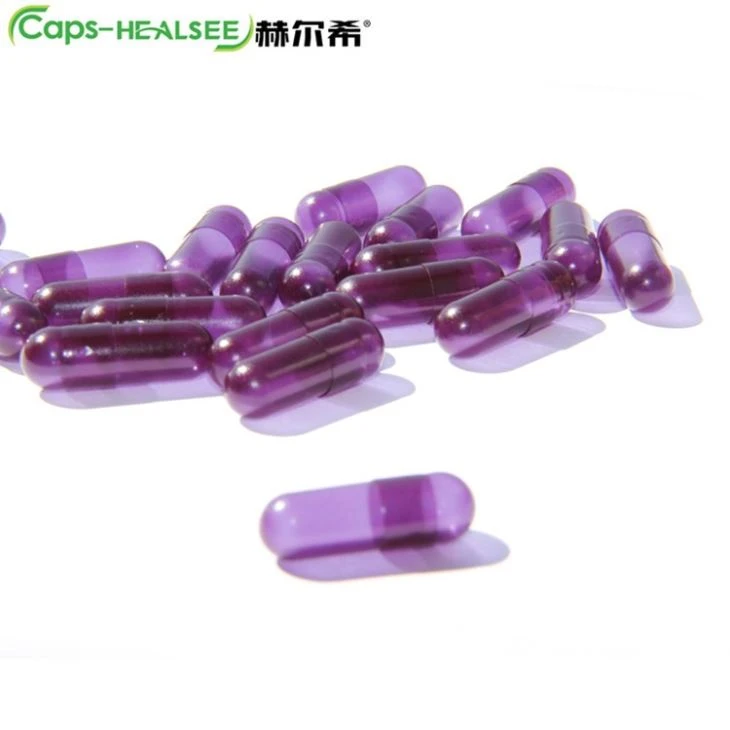
Factors Affecting Capsule Dissolution
Apart from the type of capsule material and the pH of the environment, there are other factors that can affect the dissolution of empty herb capsules in water.
- Temperature: As mentioned earlier, higher temperatures generally increase the solubility of both gelatin and HPMC capsules. For gelatin capsules, a temperature close to body temperature (37°C) promotes faster dissolution. For HPMC capsules, although they are more resistant to dissolution at room temperature, an increase in temperature can still accelerate the process.
- Agitation: Stirring or shaking the water can also enhance the dissolution of capsules. Agitation helps to increase the contact between the capsule and water molecules, facilitating the penetration of water into the capsule structure.
- Capsule Thickness: Thicker capsules will take longer to dissolve compared to thinner ones. Manufacturers can control the thickness of the capsule walls during the production process to adjust the dissolution rate according to the specific requirements of the product.
Applications and Implications of Capsule Dissolution
The dissolution properties of empty herb capsules have significant implications for their applications.
- Herbal Supplements: In the herbal supplement industry, the dissolution rate of capsules determines how quickly the herbal ingredients are released into the body. For herbs that need to be absorbed quickly, a capsule with a faster dissolution rate may be preferred. On the other hand, for herbs that need to be released slowly over time, a capsule with a slower dissolution rate can be used.
- Pharmaceuticals: Pharmaceutical companies need to carefully consider the dissolution properties of capsules when formulating drugs. The release of the drug at the right time and place in the body is crucial for its efficacy. For example, drugs that are sensitive to stomach acid may be encapsulated in gastric - acid - resistant capsules to ensure they reach the intestines intact.
Conclusion
In conclusion, the question "Do empty herb capsules dissolve in water?" does not have a simple yes or no answer. It depends on the type of capsule material, the environmental conditions (such as temperature, pH, and agitation), and the specific formulation of the capsule. Gelatin capsules generally dissolve more readily in water compared to HPMC capsules, especially at body temperature. HPMC capsules, while more resistant to dissolution in plain water, will dissolve in the acidic environment of the stomach and can be formulated to be gastric - acid - resistant.
If you are in the business of herbal supplements, pharmaceuticals, or any other industry that requires empty herb capsules, understanding these dissolution properties is essential for making the right choice of capsules. We, as a supplier of high - quality empty herb capsules, are committed to providing products that meet your specific needs. Whether you need Clear HPMC Capsules, HPMC Based Capsules, or Gastric Acid Resistant Vegetable Capsules, we have the expertise and resources to offer you the best solutions. If you are interested in learning more about our products or would like to discuss your requirements, please feel free to reach out to us for a procurement discussion.
References
- "Handbook of Pharmaceutical Excipients" by Raymond C. Rowe, Paul J. Sheskey, and Marian E. Quinn.
- "Encyclopedia of Pharmaceutical Technology" edited by James Swarbrick and James C. Boylan.
- Research articles on capsule dissolution in peer - reviewed scientific journals such as the "Journal of Pharmaceutical Sciences" and the "International Journal of Pharmaceutics".


