


Hey there! As a supplier of vegetable capsules, I often get asked whether vegetable capsules are more brittle than gelatin capsules. It's a fair question, especially since the choice between these two types of capsules can have a big impact on product quality, shelf - life, and customer satisfaction. So, let's dive right in and explore this topic.
First off, let's understand what we're comparing. Gelatin capsules are made from animal by - products, usually collagen from cows or pigs. On the other hand, vegetable capsules, such as Vegan Capsule, Vegetarian HPMC Capsules, and Halal Hard Vegetarian Capsules, are typically made from plant - based materials like hydroxypropyl methylcellulose (HPMC).
Now, let's talk about brittleness. Brittleness refers to how easily a material breaks or shatters when subjected to stress. In the case of capsules, factors like handling, storage conditions, and the nature of the encapsulated product can all affect their brittleness.
In general, some people assume that vegetable capsules are more brittle than gelatin capsules. One of the reasons for this perception is that gelatin has a certain degree of natural elasticity. Gelatin is a protein - based material, and its molecular structure allows it to stretch and bend to some extent before breaking. For example, when you gently squeeze a gelatin capsule, it might deform slightly rather than cracking right away.
However, modern vegetable capsules, especially those made from high - quality HPMC, have come a long way in terms of reducing brittleness. HPMC capsules are designed to have good mechanical properties. They are manufactured under strict quality control measures to ensure that they can withstand normal handling during the encapsulation process, packaging, and shipping.
Storage conditions play a huge role in the brittleness of both types of capsules. Gelatin capsules are highly sensitive to humidity. If they are stored in a very dry environment, the gelatin can lose its moisture content, causing it to become brittle. On the flip side, if they are stored in a very humid environment, they can absorb moisture and become sticky or even moldy. For vegetable capsules, while they are less sensitive to humidity compared to gelatin capsules, extremely dry conditions can also make them more brittle. But in general, HPMC capsules can tolerate a wider range of humidity levels.
Another factor is the filling material inside the capsule. Some products that are encapsulated can interact with the capsule shell and affect its brittleness. For instance, if the encapsulated product is hygroscopic (it attracts and holds moisture), it can draw moisture from the capsule shell. This can make both gelatin and vegetable capsules more brittle over time. However, vegetable capsules may be less affected in some cases because they have a more stable structure in the face of moisture changes.
When it comes to the manufacturing process, vegetable capsules are often produced using a more consistent and controlled method. This results in a more uniform capsule shell, which can contribute to better resistance against brittleness. The production of gelatin capsules can be more variable due to the natural source of the gelatin, which may have different properties depending on the animal source and processing methods.
Let's also consider the advantages of vegetable capsules in other aspects. They are suitable for vegetarians, vegans, and those with religious dietary restrictions, which is a huge market segment. And from a quality perspective, they are often considered to have better clarity and transparency, which can be important for products where consumers want to see the contents.
In my experience as a vegetable capsule supplier, I've seen that with proper handling and storage, vegetable capsules are not significantly more brittle than gelatin capsules. In fact, in many real - world applications, they perform just as well, if not better, in terms of durability.

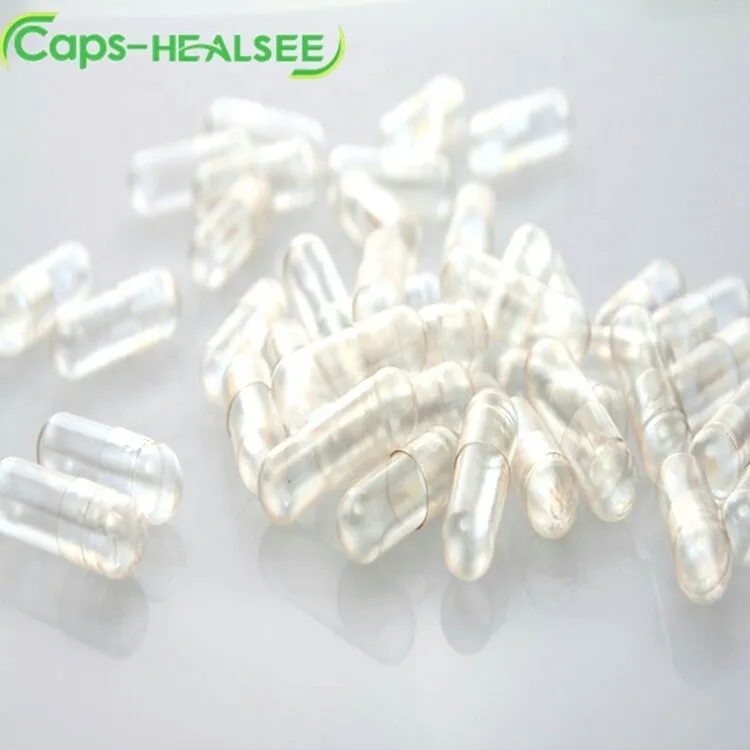
For example, in the nutraceutical industry, where products are often shipped long - distances and stored for extended periods, vegetable capsules have proven to be a reliable choice. They can maintain their integrity during transportation and storage, which is crucial for ensuring that the product reaches the consumer in good condition.
If you're in the business of producing supplements, pharmaceuticals, or other encapsulated products, it's important to test both types of capsules with your specific product. You can conduct small - scale encapsulation trials to see how the capsules perform under your normal production and storage conditions. This will give you a better idea of which type of capsule is the most suitable for your needs.
In conclusion, the idea that vegetable capsules are inherently more brittle than gelatin capsules is a bit of a myth. While there are some differences in their properties, modern vegetable capsules, especially those of high - quality, can offer comparable or even better performance in terms of brittleness, especially when considering the full range of factors like storage conditions and the encapsulated product.
If you're interested in exploring vegetable capsules for your products, I'd love to have a chat with you. Whether you're looking for Vegan Capsule, Vegetarian HPMC Capsules, or Halal Hard Vegetarian Capsules, we can work together to find the best solution for your business. Contact us to start the conversation and see how our vegetable capsules can meet your requirements.
References:
- "Handbook of Pharmaceutical Excipients"
- Industry research reports on capsule manufacturing and properties


