


In the realm of pharmaceutical and nutraceutical industries, the choice between vegetable capsules and gelatin capsules has become a significant topic of discussion. As a supplier of Vegetable Capsules, I am deeply involved in this field and have witnessed firsthand the growing interest in vegetable capsules. This blog aims to explore whether vegetable capsules are more flexible than gelatin capsules, delving into various aspects such as material sources, production processes, physical and chemical properties, and market demands.
Material Sources and Sustainability
One of the primary factors contributing to the flexibility of vegetable capsules lies in their material sources. Unlike gelatin capsules, which are typically derived from animal by - products such as bovine or porcine skin and bones, vegetable capsules are made from plant - based materials. Common sources for vegetable capsules include hydroxypropyl methylcellulose (HPMC), pullulan, and starch.
HPMC is a semi - synthetic polymer derived from cellulose, which is the most abundant organic polymer on Earth. It can be sourced from wood pulp or cotton linters, both of which are renewable resources. Pullulan is a polysaccharide produced by the fermentation of starch by the fungus Aureobasidium pullulans. Starch, on the other hand, can be obtained from various plants like corn, potato, and tapioca.

The use of plant - based materials makes vegetable capsules a more sustainable option. With the increasing global concern for animal welfare and environmental protection, many consumers are actively seeking products that are not derived from animals. This has opened up new market segments for vegetable capsules, especially in the vegan and vegetarian communities. For example, vegan consumers who adhere to strict dietary restrictions that exclude all animal products can now take supplements in vegetable capsules without compromising their principles.
In contrast, gelatin capsules face limitations due to their animal - based origin. They may not be suitable for certain religious groups, such as Muslims and Jews, who follow dietary laws that prohibit the consumption of pork or non - kosher animals. This restricts the market reach of gelatin capsules compared to vegetable capsules, which have a broader appeal.
Production Processes and Customization
The production processes of vegetable capsules offer greater flexibility in terms of customization. Vegetable capsules can be manufactured using different techniques, allowing for a wide range of shapes, sizes, and colors.
In terms of size, Empty Vegetable Capsules Size 00 are a popular choice, but vegetable capsules can be produced in various other sizes to meet different dosage requirements. For pharmaceutical applications, smaller capsules may be preferred for precise dosing, while larger capsules can be used for nutraceuticals with higher volumes of active ingredients.
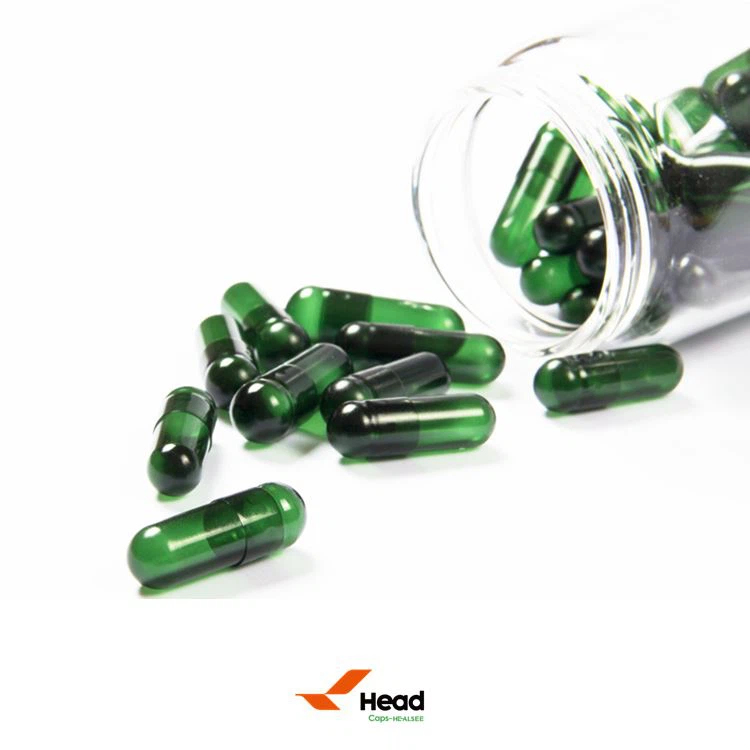
The color of vegetable capsules can also be easily adjusted. For example, Green Transparent Capsule can be created by adding natural or synthetic colorants during the production process. This not only provides an aesthetic appeal but also allows for product differentiation in the market. Different colors can be used to represent different types of products or to indicate specific features such as the presence of certain ingredients.
Gelatin capsules, on the other hand, have more limited customization options. The production of gelatin capsules is more closely tied to the properties of the gelatin material, and changes in size, shape, and color may be more difficult to achieve without affecting the quality and stability of the capsules.
Physical and Chemical Properties
The physical and chemical properties of vegetable capsules contribute to their flexibility in different applications. Vegetable capsules generally have better moisture resistance compared to gelatin capsules. Gelatin is a hydrocolloid, which means it can absorb moisture from the environment. This can lead to issues such as capsule sticking, deformation, and reduced shelf - life, especially in high - humidity conditions.
Vegetable capsules, especially those made from HPMC, have a lower moisture uptake rate. This makes them more suitable for products that are sensitive to moisture, such as probiotics and certain vitamins. Probiotics are live microorganisms that can be easily affected by moisture, and using vegetable capsules can help maintain their viability during storage and transportation.
In addition, vegetable capsules have a wider pH stability range. Gelatin capsules may be affected by the pH of the contents, and in some cases, acidic or alkaline substances can cause the gelatin to dissolve or degrade prematurely. Vegetable capsules, on the other hand, can tolerate a broader range of pH values, allowing for a wider selection of active ingredients to be encapsulated.
Market Demands and Regulatory Compliance
The market demand for vegetable capsules is on the rise, driven by changing consumer preferences and regulatory requirements. As mentioned earlier, the growing trend towards veganism and vegetarianism has increased the demand for plant - based products, including vegetable capsules.
Moreover, regulatory bodies around the world are becoming more stringent in their requirements for product safety and quality. Vegetable capsules, with their natural and plant - based origin, are often perceived as a safer and more natural option. They are less likely to contain contaminants or allergens compared to gelatin capsules, which may be at risk of cross - contamination during the processing of animal by - products.
In some regions, there are specific regulations regarding the use of animal - derived ingredients in food and pharmaceutical products. For example, in the European Union, products containing gelatin must be clearly labeled to indicate the source of the gelatin (bovine or porcine). This can be a challenge for manufacturers, especially those targeting international markets. Vegetable capsules, being animal - free, do not face such regulatory hurdles, providing more flexibility for global market expansion.
Conclusion
In conclusion, vegetable capsules are indeed more flexible than gelatin capsules in many aspects. Their plant - based material sources offer greater sustainability and a broader market appeal, especially among vegan and vegetarian consumers. The production processes of vegetable capsules allow for more customization in terms of size, shape, and color. Their physical and chemical properties, such as better moisture resistance and wider pH stability range, make them suitable for a wider variety of products. Additionally, the growing market demand and favorable regulatory environment for vegetable capsules further enhance their flexibility in the industry.
If you are in the pharmaceutical or nutraceutical industry and are looking for a reliable and flexible capsule solution, I invite you to explore our range of Vegetable Capsules. We are committed to providing high - quality products that meet your specific needs. Contact us to discuss your requirements and start a procurement negotiation. Our team of experts is ready to assist you in finding the best vegetable capsule solution for your business.
References
- Jones, A. (2018). The Future of Capsule Technology. Pharmaceutical Technology, 42(3), 45 - 52.
- Smith, B. (2019). Vegetable Capsules: A Sustainable Alternative. Nutraceutical Business Journal, 15(2), 67 - 73.
- Brown, C. (2020). Regulatory Considerations for Capsule Manufacturing. International Journal of Pharmaceutical Regulation, 22(4), 89 - 96.


